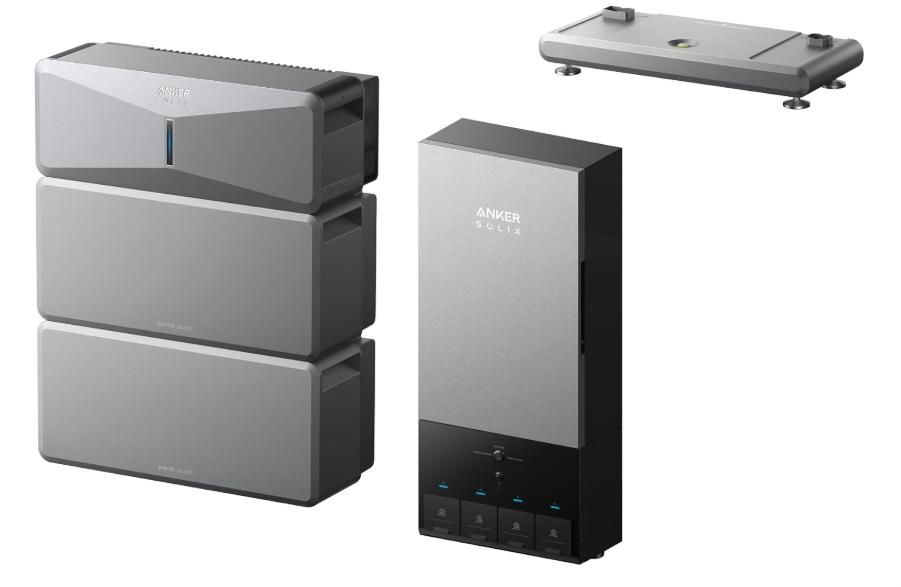
Executive Summary
Buy the Anker Solix E10 if you want a serious home backup system for outages, solar integration, essential circuits, and future expansion — and you are ready for the planning that comes with electrical-panel-level backup. Skip it if you only need to run a fridge, charge phones, keep Wi-Fi alive, or power a few camping/worksite devices.
The pitch is simple: a cleaner whole-home backup path without jumping straight to Tesla Powerwall territory.
The hard part is not whether the E10 is powerful. The hard part is whether your home actually needs a system this involved. At a starting price around $4,299 and higher bundles rising substantially, the E10 sits between portable power stations and professionally installed home batteries. That makes it appealing, but also easy to overbuy.
BEST FOR
The best buyer is a homeowner who has outage anxiety, wants battery backup instead of relying only on gas, and understands that the real purchase is not just a battery box — it is a home-power plan.
- + Homeowners who want essential-circuit backup for outages
- + Solar-curious buyers who want expandable storage
- + People comparing Tesla Powerwall, EcoFlow Delta Pro Ultra, and generator systems
- + Buyers who prefer a modular path instead of one massive all-at-once install
Skip If
The E10 is not the right first backup product for everyone. A lot of homes would be better served by a smaller power station, a dedicated refrigerator backup battery, or a conventional generator.
- You rent, move often, or cannot make electrical-panel changes.
- You only need short outage backup for phones, lights, internet, or one appliance.
- You want a grab-and-go battery for camping, tools, tailgating, or mobile work.
- You are not ready to compare circuits, transfer options, solar input, permits, and installation labor.
- You need proven long-term owner data before trusting a newer whole-home platform.
Price Reality Check
The Solix E10 starts around $4,299 for a base system, with higher packages adding items like the Power Dock or Smart Generator. That puts it far above normal portable power stations but below many full whole-home battery installs.
At this price, the E10 needs to protect a home plan — not just win a spec-sheet argument.
The value case is strongest if you already know which circuits matter: refrigerator, freezer, internet, sump pump, medical gear, some lighting, or possibly HVAC depending on configuration. The value case gets weaker if you simply want peace of mind but have not mapped what you need to run, how long you need it, and whether a cheaper portable battery would cover the real problem.
Deep Dive
Whole-Home Ambition Without a Full Powerwall Jump
The E10's appeal is the middle lane. It is more serious than a portable battery, but it is positioned as more flexible and approachable than many full home-battery installations.
The buyer question: do you need a system, or just a backup box?
- The base system is positioned around high-output home backup rather than small-device charging.
- The Power Dock path matters if automatic cutover and circuit control are part of the goal.
- The Smart Inlet path may make more sense for buyers who want lower complexity and can tolerate manual operation.
- The system becomes more compelling if you plan to expand with batteries, solar, or generator backup later.
Buyer takeaway: The E10 is most interesting when you want a home backup roadmap. If you just want outage insurance for one appliance, compare down hard.
Output, Surge, and the HVAC Temptation
Launch coverage highlights a 7.68 kW continuous-output class and very high surge capability in larger configurations. That sounds exciting because it pushes the conversation toward central air, pumps, and larger home loads.
The catch: surge ratings and real home compatibility are not the same thing. Circuit selection, startup load, installer choices, local code, battery size, and how long you expect to run heavy loads all matter.
Buyer takeaway: Do not buy this because one headline says it can start a big appliance. Buy it after matching the system to your actual loads.
Modular Expansion and Solar
The E10 can scale beyond a basic backup setup, which is the main reason it deserves attention. Expansion turns the product from a one-time battery purchase into an energy-storage platform.
- Modularity is useful if your outage needs grow over time.
- Solar input is attractive for long outages, but only if your roof, panels, wiring, and utility rules cooperate.
- Battery expansion can become expensive quickly, so buyers should compare cost per usable kWh against EcoFlow, Tesla, Jackery, and gas-generator approaches.
Buyer takeaway: Expansion is a strength, but it should be planned. Randomly adding batteries later is not the same as designing a resilient home-power setup.
Real-World Ownership Check
This is where the E10 gets serious. A portable battery can sit in a closet. A whole-home backup system asks you to think like a homeowner: circuits, wall space, installer access, permits, app reliability, service support, and what happens during a real outage.
- Setup: Expect more planning than a portable battery. The home-panel path may require professional electrical work.
- Maintenance: Battery systems reduce fuel storage chores, but app monitoring, firmware, ventilation, and long-term support still matter.
- Fit: The stackable design helps with floor footprint, but you still need a practical utility-area location.
- Noise: Battery operation should be calmer than a generator, but a generator bundle changes the ownership story.
- Deal breaker: If you cannot define your critical circuits, you are not ready to buy a system this expensive.
What I Would Compare Next
The right comparison is not only another Anker product. It is the full home-resilience decision.
- EcoFlow Delta Pro Ultra / Delta Pro Ultra X: Compare for a more established whole-home battery ecosystem and accessory depth.
- Tesla Powerwall: Compare if you want a more conventional installed home-battery path and already have or plan solar.
- Jackery HomePower 3600 Plus: Compare if you want serious battery backup but less electrical-panel ambition.
- BLUETTI FridgePower: Compare if refrigerator protection is the main emergency use case.
- Tri-fuel generator: Compare if runtime, HVAC, and refill flexibility matter more than quiet indoor battery operation.
Buyer Signal Analysis
The Anker Solix E10 deserves a closer buyer look because it sits in a confusing middle zone. It is not a small emergency power station, but it is also not the same decision as a fully installed legacy home battery. That creates a lot of search confusion for homeowners trying to compare cost, runtime, circuit coverage, and installation risk.
Buyer Confidence by Evidence Type
Assimilated Signal Sources
- ManufacturerAnker positions the E10 around modular whole-home backup, solar input, automatic cutover with Power Dock, battery expansion, and generator pairing.
- Professional coverageLaunch and availability reports emphasize price versus Tesla/EcoFlow, high surge capability, modularity, and the complexity of manual versus automatic cutover options.
- YouTube demosVideo evidence should be checked for physical footprint, installer explanations, app behavior, Power Dock workflow, generator noise, and real appliance tests.
- Amazon ownersOwner feedback should be watched for shipping damage, installer coordination, support friction, app reliability, battery expansion costs, and real outage performance.
- Reddit chatterThe likely debate is battery backup versus generator, whether Anker support can handle home-energy complexity, and whether first-generation whole-home systems are worth early adoption.
Unanswered Buyer Questions
QuietTrends read: This is a useful early review because the E10 solves a real problem, but the buyer decision depends heavily on home-specific planning. The safest move is to compare it as an installed backup system first and a battery product second.
OUR VERDICT
Plan First
Anker Solix E10 Whole-Home Backup
The Anker Solix E10 is a serious modular backup system for homeowners who want more than a portable battery, but it is too home-specific to buy casually from specs alone.
Final Buyer Guidance: Buy after you map your critical circuits, installation path, and expansion plan. Compare first if you mainly need appliance backup, portable power, or the lowest-cost outage solution. Wait for more owner data if long-term support and first-generation platform maturity matter most.