Executive Summary
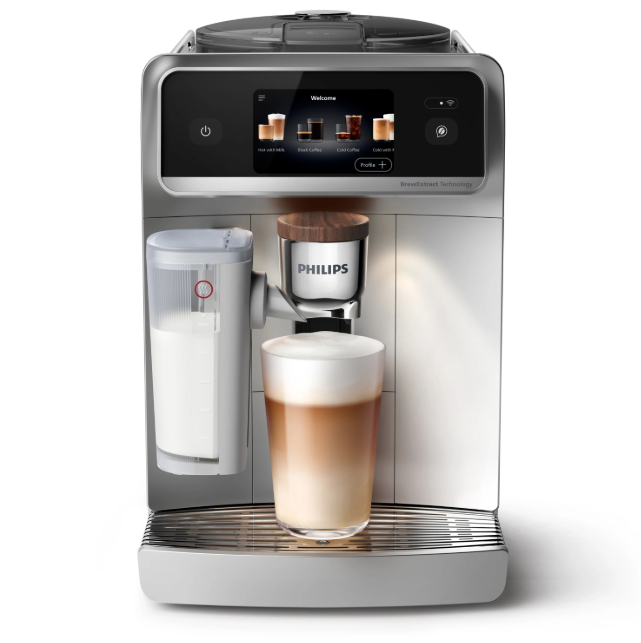
Buy the Philips Cafe Aromis 8000 if several people in your home want genuinely different espresso drinks, you value one-touch convenience, and you want more control than a normal superautomatic provides without manually grinding, dosing, tamping, and steaming.
The pitch is simple: café-style variety without turning coffee into a hobby.
Compare first if you mainly drink straight espresso, already own a capable grinder, or expect complete control over milk texture. The Aromis is unusually flexible for an automatic machine, but its value comes from household convenience, profiles, guided adjustment, hot-and-cold milk drinks, and easy cleanup—not from replacing a skilled barista or a serious semi-automatic setup.
BEST FOR
This machine makes the most sense in a busy household where coffee preferences vary and convenience matters every morning. Its strongest buyer is not necessarily a coffee obsessive—it is the person who wants consistently good drinks without a countertop full of separate equipment.
- + Households with several coffee drinkers who want separate saved profiles
- + Latte, cappuccino, iced-coffee, and cold-foam drinkers
- + Buyers who want guided flavor adjustments instead of manual espresso technique
- + People who will actually use the broad hot-and-cold drink menu
Skip If
The Aromis solves a convenience problem. It is easy to overspend if your actual coffee routine is simple.
- You mostly drink black coffee or one basic espresso every morning.
- You want to manually control dose, puck preparation, extraction time, and milk texture.
- You expect a nearly silent grinder because the SilentBrew branding sounds literal.
- You dislike app-connected appliances or software-guided customization.
- You do not want to clean milk parts, empty grounds, refill water, or descale an automatic machine.
Price Reality Check
The US list price is about $1,699.99, placing the Cafe Aromis 8000 firmly in premium superautomatic territory. That is roughly the point where buyers should stop comparing it with ordinary pod machines and start comparing it with Jura, De'Longhi, Siemens, Terra Kaffe, and a grinder-plus-semi-automatic setup.
At this price, drink variety alone is not enough—the workflow has to save you real time.
The value becomes easier to defend when four or five café drinks per day would otherwise come from a coffee shop, or when multiple users would fight with a manual machine. It becomes harder to defend for one person making two straightforward drinks. A discounted price meaningfully improves the decision because the core performance evidence is strong; the remaining uncertainty is mostly long-term ownership rather than whether it can make enjoyable coffee.
Deep Dive
Fifty-Plus Drinks and Guided Customization
The headline number is more than 50 hot and cold drinks, but the useful feature is the machine's ability to turn vague preferences into repeatable settings. Philips combines adjustable strength, volume, temperature, profiles, and a conversational-style assistant intended to help users correct drinks that taste too weak, strong, bitter, or mild.
The buyer benefit: experimentation without wasting weeks learning espresso variables.
- Eight profiles reduce the need to rebuild individual drinks each morning.
- BrewExtract technology is designed to use a larger coffee dose for stronger café-style intensity.
- Hot and cold recipes make the machine more useful across seasons.
- The wide menu matters most when the household genuinely drinks across it.
Buyer takeaway: This is one of the rare premium automatics where customization looks accessible rather than buried in expert terminology.
LatteGo Pro: Convenience Beats Microfoam Control
LatteGo Pro handles both hot and cold froth without the internal milk tubes that can make automatic machines unpleasant to clean. The system is aimed at speed and repeatability: attach the container, choose the drink, then rinse the milk parts under running water.
The catch: convenience is not the same as complete texture control. Reviews indicate that milk results are enjoyable and consistent, but buyers cannot treat this like a steam wand where they independently shape microfoam for each drink.
Buyer takeaway: LatteGo Pro is a strong reason to buy for mixed milk-drink households and a weaker reason for people who enjoy manual steaming.
Coffee Quality Is Better Supported Than the Marketing Alone
The strongest signal is not the large recipe count. In a blind comparison reported by WIRED, coffee professionals preferred the Philips machine's espresso and latte results over competing fully automatic machines from more expensive brands. Separate hands-on reviewers have also praised its balanced drinks and unusually approachable flavor adjustment.
- The evidence suggests the machine can make convincing coffee without expert intervention.
- Bean quality and freshness still matter; automation cannot rescue stale supermarket beans.
- Straight-espresso enthusiasts should still compare a dedicated grinder and semi-automatic machine.
Buyer takeaway: The Aromis is not merely feature-rich—the available taste evidence supports its premium positioning better than expected.
Real-World Ownership Check
A fully automatic coffee machine replaces barista technique with appliance maintenance. The daily work is easier, but it does not disappear.
- Setup: The guided touchscreen and app support make first-time configuration relatively approachable, but users still need to dial in beans and preferences.
- Cleaning: LatteGo parts rinse quickly, while the grounds container, drip tray, brew system, and descaling schedule remain normal ownership chores.
- Counter fit: At roughly 9.9 inches wide, 15.3 inches high, and 17.8 inches deep, it is relatively narrow but deep enough that cabinet clearance and front access matter.
- Noise: Reviewers say the machine is not as quiet as the SilentBrew name may imply.
- Mess: At least one review noted coffee residue leaking into the lower tray from the grounds container.
- Deal breaker: Long-term repairability and owner durability data are still thinner than they are for mature premium platforms.
What I Would Compare Next
Compare by preferred workflow, not by the number of recipes printed on the box.
- De'Longhi Eletta Explore or PrimaDonna: Compare milk customization, cold drinks, established ownership evidence, and pricing.
- Jura E8 or J10: Compare premium build, service network, drink quality, and the much higher cost of some configurations.
- Terra Kaffe TK-02: Compare app-first control, design, software dependence, and coffee flavor.
- Philips 5500 LatteGo: Compare if you want Philips convenience but do not need the Aromis drink range, profiles, or premium interface.
- Breville Barista Touch Impress: Compare if you want guided help but prefer a more hands-on espresso workflow.
- Fellow Espresso Series 1 plus a grinder: Compare if manual control and the learning process are part of the appeal.
Buyer Signal Analysis
The Philips Cafe Aromis 8000 has more professional coverage than some QuietTrends products, but mainstream search results still focus heavily on feature praise. The harder buyer question is narrower: does this household need a $1,700 automatic machine, or would a cheaper Philips, a more established premium superautomatic, or a semi-automatic system fit better?
Buyer Confidence by Evidence Type
Assimilated Signal Sources
- ManufacturerPhilips documents 50-plus drinks, BrewExtract dosing, hot and cold LatteGo Pro froth, eight profiles, app support, and quick milk-system rinsing.
- Professional reviewsTechRadar, T3, Mumsnet, Ideal Home, Woman & Home, and WIRED provide broadly positive evidence with useful concerns around price, noise, milk control, residue, and maintenance.
- YouTube demosVideo is most useful for interface speed, drink dispensing, milk-container handling, grinder noise, cleaning, and actual counter depth.
- Amazon ownersExact-model US owner volume is still developing, so buyers should verify current ratings, seller identity, warranty eligibility, and return terms before purchase.
- Reddit chatterDiscussion remains thinner than for Jura, De'Longhi, Breville, and older Philips LatteGo models, limiting long-term owner certainty.
Unanswered Buyer Questions
QuietTrends read: Buyer confidence is high that the Aromis can produce enjoyable, highly customized drinks with unusually low effort. Confidence is lower that every interested buyer needs its full capabilities—or that its long-term ownership story is mature enough to skip comparison shopping.
OUR VERDICT
Compare First
Philips Cafe Aromis 8000
A strong premium superautomatic with credible coffee-quality evidence, excellent household customization, and unusually easy milk-system cleaning—but a price that only makes sense when its broad workflow is genuinely useful.
Final Buyer Guidance: Buy it when multiple people want different café-style drinks and nobody wants to become the household barista. Compare down to the Philips 5500 if your menu is simpler, compare across to De'Longhi or Jura for platform maturity, and compare with a semi-automatic setup if control and craft matter more than one-touch convenience.